Monday, July 1, 2013

Instant Garden (at a super cheap price)

I often wonder how many times I say, "I was at Home Depot/ Lowe's/ Tractor Supply/Rural King/ Menard's / Fill in the blank and I found..."?

So yes- it is going to be one of those posts.

I was at Lowe's and that had a crap ton (which is ALOT of stuff) of perennials marked down to a dollar.

Doesn't it look pretty?

A DOLLAR Y'ALL!!
Like I was gonna pass that up, haha no way!!

  (because my trunk/ car because it was full of stuff I was taking to Goodwill for a donation drop off)

I only bought:
6 Shasta Daisies
6 Penstemon
3 Coreopsis
2 Rudbeckia
2 Trailing Cranesbill

I was so excited I almost forgot the main reason I went in there which was to buy some tomato cages because I didn't feel like making any. One of my neighbors gave me 5 more tomato plants and 3 pepper plants. They aren't all heirlooms but it wasn't like I was going to say no. haha

Lilies, Daisies, Coreopsis and Rudbeckia
As I mentioned in an update the kids bought a house, which has nooooo landscaping. I made them a planter barrel but for a buck a piece how could I not get them some plants. Although, no doubt some of these will find their way to one of my garden  beds.
Daisies and dianthus--MINE!
Fortunately for me (and my wallet)  there is a torrential downpour since I don't feel like swimming to Lowe's. I'll be nice and save some plants for other people...

MAYBE

Except the kid called and when I told her about the sale, she said the magic words...
"I'll be there in a few minutes and I have my SUV" 

So much for restraint, haha

2nd trip I bought ...
5 Asiatic lilies
5 fountain grass
4 dianthus
3 bee balm *
1 butterfly bush
Everything was a buck except for the bee balm
*(these were $3.00 each marked down from $7.98)

Penstemon
I think  it is gonna be a nice housewarming gift (well part of it anyway) and the best part?
They are on their way to an instant garden in their first home!


Bee balm, trailing cranesbill,  dianthus
Scarlet Fountain Grass
Butterfly Bush
Here's the cost breakdown


Quantity Original Price Full Price Cost Sale Price Sale Cost
Shasta Daisy
6 $5.98 $35.88
$1.00
$6.00
Penstemon
6 $5.98 $35.88
$1.00
$6.00
Asiatic Lilies
5 $7.98 $39.90
$1.00
$5.00
Fountain Grass
5 $7.98 $39.90
$1.00
$5.00
Dianthus
4 $5.98 $23.92
$1.00
$4.00
Bee balm
3 $7.98 $23.94
$3.00
$9.00
Coreopsis
3 $3.68 $11.04
$1.00
$3.00
Cranesbill
2 $7.98 $15.96
$1.00
$2.00
Rudbeckia
2 $3.68 $7.36
$1.00
$2.00
Butterfly Bush
1 $7.98 $7.98
$1.00
$1.00


$241.76 Total (pre-tax) $43.00


$229.67 Discount (5%) $40.85


$15.71 Tax (6.5%) $2.80


$213.96 Grand Total $38.06


I saved $175.90...WOOT!!!!

Anyone else score some good deals lately?

Shared on
http://hibiscushouse1.blogspot.com/2013/07/farmgirl-friday-blog-hop-115.html


Saturday, June 29, 2013

Growing Tomatoes 101

One of my readers on My Cozy Little Farmhouse's Facebook Page  posed the question of could I provide any tips on getting a good tomato yield, which was in response to my post that after reviewing my canning notes from last year I had processed 157 POUNDS of tomatoes. That is what I canned or had frozen. Not including the tomatoes I used fresh, gave away or the small percentage I lost  due to rot/ insect/ animal damage.

Let that roll around your brain...157 POUNDS. That is the equivalent of a person (and  a weight I wouldn't mind seeing on my scale again...soon).

So I thought I would put together a Tomato 101. 

A few terms  you should know

Determinate tomatoes are usually a bush type and compact. They set fruit and ripen mostly at the same time (usually a 2 week span). Do NOT pinch off suckers for determinate varieties.

Indeterminate tomatoes are more of a "vining" type tomato and will produce until a killing frost. They can can grow up to 10 ft in height but mine usually hit 5-6 feet. They require strong support (cage or stake).

OP Open pollinated by wind or pollinating insect. A cultivar capable of producing seeds and plants like the parent. Not all OP are heirloom!

HEIRLOOM Usually 50 years or older.Heirlooms are about preserving natural history/ characteristics of a plant. Not all heirlooms are organic.  All heirlooms are OP. Some heirlooms actually started out as hybrids and eventually stabilized. Heirlooms can be generational, legacy, old market or modern depending on the lineage and how far back it can be traced.

HYBRID (aka cross pollinated) Hybrids can be man-made or cross pollinated in nature. Man-made hybrids originated in the 1920's. Hybrids will not always reproduce a plant with the identical characteristics of a parent plant. Some hybrids the seeds will be sterile.

GMO Genetically Modified Organism involves gene splicing. Taking DNA from completely different species and organisms to isolated desired characteristics (resistance to pesticides or acceptance of a fertilizer)

F-# Means x# of generation hybrid. This does NOT mean GMO. This is simply a  transfer of pollen from one cultivar to another of the same species.

OC Organic Certified. Certified crop grown to a set of strict and specific standards

V is the designation for verticillium wilt. You want the V resistant varieties. Verticillium wilt is caused by a fungus late in the season. Follow this link to read more about this disease and for a list of V resistant cultivars.

F/ FF is the designation for Fusarium Wilt/ Fusarium Races 1 and 2. This is another fungal disease that affect tomatoes, peppers, eggplants and potatoes. Follow this link to read more.

N is the designation for Nematodes. Follow this link for more information and list of VFN resistant varieties.

T is the designation for Tobacco Mosaic virus. TMV affects tomatoes, peppers and ornamentals worldwide. Follow this link for more information.


There are additional fungi which can affect tomatoes but I chose to list the universal troublesome varieties. For additional information check with your local agricultural extension.

I know I know, y'all are saying all I wanna do is dig a hole, drop in some seeds or a plant and get  some yummy nummies in  x number of days...


Here are some tips for maximum 'mater output

1. Always begin with well amended and aerated soil. The soil should be 6.0-6.8 pH.

2. Plant a good mix of determinate and indeterminate plants so you have staggered harvesting times.

3. Trench planting ensure the plants are well rooted and will support the weight of the fruit. Dig a trench, remove all but the top 2-4 sets of leaves. Lay the plant on it's side with direct contact to soil. All those "hairs " on the stem will form roots.
source

4. Stake or cage your plants at this point. Nice and sturdy to support the weight of your intended bounty. You have lots of options: cages, stakes (Florida weave), spiral, ladder or tripod.  If staking do not bind the plants tightly or you will damage them making them susceptible to damage or death. Follow this link for more information.


5. Make sure the plants are spaced well. Good air circulation means you are less likely to have problems with pests or blight.

6. Water deep at the roots. Moist, well drained and no standing water! An innovative way to do this is to insert perforated tubes near the roots when planting.
source
7. When the plants set blossom an begin developing fruit, side dress with compost or if you must a nice organic fertilizer (8/10/10 or 10/10/10) These numbers represent NPK  which is Nitrogen, Phosphorous and Potassium. These elements are needed for proper nutrition, development of healthy plant and fruit.


8. Be diligent with pruning and pinching off the suckers on your (indeterminate plants only)! You want the energy to go into making your food not more plant.  You will have a main stem from which branches (axis) will form (effectively making a Y formation). Pinch the suckers off that appear in the Y juncture (it makes it look like a W). This also promotes much need space for air circulation and light penetration.
source

9.  When the weather gets really hot (usually mid July in the Midwest) I blanket the bed with straw to a depth of 2 to 3 inches. I make sure the straw is nice and loose so water and air can get in but thick enough to deter weeds. It retains moisture, cools the roots and provides a barrier between the fruit and soil, reducing chances for spoilage.

10. Harvest frequently and enjoy the "fruits" of your labor!


Maybe you are new to growing tomatoes or maybe you have been doing this for years. Either way I hope you enjoyed my post. If you have any great hints or tips please share because I am by no means an expert and I love to learn!


Sharing on Savvy Southern Stylehttp://www.savvysouthernstyle.net/2013/07/wow-us-wednesdays-125.html


Thursday, June 27, 2013

How I began Holistic Gardening (part 2)

Well I already took you on a walk down memory lane when I talked about my introduction into holistic gardening. I took the knowledge from Betty Jean and began to grow vegetables in containers on my balcony.  Now during this time I was completing my education as a chemist and soon I found myself reading the labels on my bottles of fertilizers and pesticides. And I have to tell you it literally made me nauseous to think of the poisons--and that is exactly what they are--we were ingesting.


So I did what was second nature to me--I researched. I read. I gave myself an education in organic gardening. I say organic gardening because I did not embrace all the holistic methods at this point. I mostly found books at yard sales and second hand stores because I was still  in college and broke! (Ok now that I think about it it is 23 years later and I am in college and broke....um what?) The "hippie generation" had a back to the land movement in the 1960's and 1970's  but surprisingly there were not a lot of books from their experiences. There were a few I located and some of the books were better than others. I wish I could recall all the titles.  Not all the books I referenced at that time were organic methods but  I gleaned the best information from all of them.
I began to frequent libraries to find information from the newer publications but back in those days there weren't many. Barnes and Noble was formerly B. Dalton's and  Borders was formerly Walden's of which, neither were conveniently located. And the Internet? Well it was in it's early days


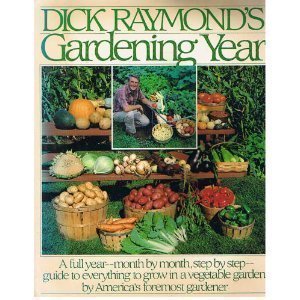
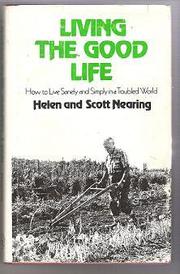
Some of the books I used (and  most still on my bookshelf )


Still have it!

Still have this one too!

Rodale Encyclopedia

(Except now I have the newest one)

Said to be the BIBLE of self sufficiency.  I wish I had kept this book.

I still hungered for more knowledge. So I began to ask people I knew who gardened how they managed.  Sadly, most people I spoke with used chemicals and synthetic fertilizers. It was so frustrating. Then several things occurred. I spoke to my step-Grandpa who clued me in on some "old timey" techniques and someone I befriended introduced me to the best publication-ever! Mother Earth News. Seriously my mind was blown! 

You have to understand at that time many of the things we now take for granted were not yet mainstream. It really wasn't until the late 1990's and early 2000's that there was an explosion in the green movement. Regardless of the little bit of knowledge I acquired -it was Nirvana. I began to learn about things like  manures (green and brown), compost (what you need to make it), using egg shells as a calcium supplement to the soil, and companion plants. I also learned that ladybugs, praying mantis and worms in your garden were a good sign.

I had been gardening at this point for about 8 years and still knew next to nothing! I was working, making a decent wage and could finally afford some of the newer books on organic gardening. I also had become computer literate and learned how to use the Internet. That is when all the pieces of the puzzle began to fall in place. I spent another 5-8 years slowly learning about organic gardening. 

Then we bought a house. Going from containers to an actual plot of land-well that was certainly a game changer! In my containers everything was controlled. The land was wild and the rules I had learned didn't always apply. My yard and garden were horribly neglected and the soil was decimated.

By now the green movement is in full swing and you were no longer viewed as part of a fringe movement. You could  take classes at the local community center on organic gardening and information was everywhere. I finally had the time to commit to gardening. It was no longer just a hobby-it had become a way of life.


Ok I think that is enough history for tonight. The conclusion to this journey will put all the pieces together. Stay tuned!